
The Pagebluk of COVID-19 is still ongoing. SARS-CoV-2 has now attacked more than 1.3 million people in our country. Of these, around 36 thousand people died from the COVID-19 disease. The good news is that around 1.1 million people have also succeeded from the threat of this disease.
Both the government in Indonesia and other countries continue to work to break the chain of spreading the corona virus. Various methods are used to slow down the transmission of the corona virus. Now, the method that is being done intensively is the COVID-19 vaccination program.
The COVID-19 vaccine is said to slow the transmission of COVID-19. The corona virus vaccine is expected to create herd immunity so that transmission of the corona virus will slow down, even disappear.
COVID-19 Vaccine Slows Corona Virus Transmission
Of the various brands of vaccines used by the global community, the Pfizer vaccine now grabs the attention of many eyes. According to one study, the Pfizer vaccine appears to slow the spread of the coronavirus as well as prevent people from getting very sick.
The good news is that these findings support a similar study by Public Health England and the Oxford-AstraZeneca study, which looked at whether a vaccine could stop the spread of the virus. The researchers say the results are very encouraging news.
However, they warned that other precautions were still needed to fight the coronavirus.
According to a study at Addenbrooke Hospital, Cambridge, Pfizer's COVID-19 vaccine appears to be slowing the spread of the coronavirus. Research at the hospital was carried out by regularly testing staff for the coronavirus. This test also includes those who don't show any symptoms.
Vaccinations at Addenbrooke Hospital were carried out in early December 2020. A month later there were officers who had been vaccinated against COVID-19 and had not been vaccinated. So, according to the results of routine examinations, 17 out of 1,000 unvaccinated staff tested positive in mid-January 2021.
Meanwhile, only four out of 1,000 officers who received the first dose of the vaccine identified positive. In addition, there was a similar decrease among people who had no symptoms, but who still tested positive. In other words, there is still the potential for someone to spread the virus without realizing it.
According to researchers, a single dose of Pfizer vaccine can reduce the risk of infection by up to 70 percent. Meanwhile, two doses of Pfizer can reduce infections by up to 80 percent. Meanwhile, the Oxford-AstraZeneca vaccine is estimated to reduce infection by about two-thirds.
"You cannot spread the virus if you are not infected. This study shows that the vaccine blocks infection in someone who has no symptoms," said Prof Lawrence Young, of Warwick Medical School, as quoted in the BBC.
What's New on Vaccines in Indonesia?
Pfizer is one of the COVID-19 vaccines that are planned to be used in Indonesia. However, according to the spokesperson for the COVID-19 vaccination from the Indonesian Ministry of Health, Dr. Nadia Tarmizi (17/2), there has been no final decision regarding the Corona Pfizer-BioNTech vaccine. The government plans to bring in 50 doses of Pfizer vaccine.
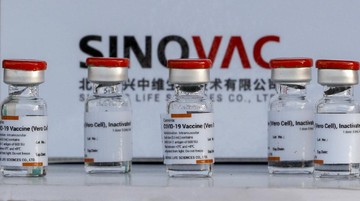
Then, what about other vaccines used in our country, for example the Sinovac vaccine? In January, Head of BPOM Penny K Lukito revealed the results of an interim analysis of clinical trials in Bandung showed the efficacy of Sinovac at 65.3 percent. This figure has met the requirements of the World Health Organization (WHO), which is above 50 percent. Unfortunately, until now there has been no similar research on the Sinovac vaccine, as in the Pfizer vaccine above.
However, the COVID-19 vaccine clinical trial team stated, from the results of research the Sinovac COVID-19 vaccine is safe to use. This was concluded based on the condition of the volunteers after two stages of injection. "I said that all this time, the safety was good enough," said Kusnandi, head of the COVID-19 vaccine clinical trial research team, as quoted from Youtube IKA Unpad.
According to Kusnandi, vaccine safety was concluded after the discovery of no extraordinary side effects from the Sinovac vaccine when the study was conducted. In fact, President Joko Widodo has been willing to be the first person to be injected with the Sinovac vaccine to prove the safety of the vaccine.
Vaccine Does Not Mean Immune
Although the COVID-19 vaccine is said to be able to slow the transmission of the corona virus, do not ever assume that the body will be immune to SARS-CoV-2 attacks after being vaccinated. Basically, vaccines are indeed the most powerful weapon to reduce the attack of the corona virus.
According to the World Health Organization (WHO), vaccination is one of the most effective ways to prevent diseases, including COVID-19. Vaccines help the immune system to recognize and fight pathogens such as viruses or bacteria, which keeps the body safe from the diseases they cause.
What needs to be emphasized is that vaccines are not always able to protect the body 100 percent from virus and bacteria attacks. Well, the same is true for the COVID-19 vaccine.
According to experts, someone who is vaccinated against COVID-19 is not immediately 100 percent immune to this disease. Because it still takes time to increase antibodies in the body. In addition, even though we have been injected twice (the vaccination dose for COVID-19), it does not make the body's antibodies prime immediately. It still takes time for the antibodies to prime.
That is why, the Centers for Disease Control and Prevention (CDC) says that people should not assume that they are completely immune after being vaccinated.
In addition, the protection provided by vaccines may fade over time. That is why some vaccines require booster shots years later. This includes the corona virus which we are given in two doses.




0 Comments